The Business Research Company’s Chemotherapy-Induced Neutropenia Treatment Market Report 2026 – Market Size, Trends, And Global Forecast 2026-2035
LONDON, GREATER LONDON, UNITED KINGDOM, November 11, 2026 /EINPresswire.com/ — “The chemotherapy-induced neutropenia treatment market is gaining significant traction as the need for effective management of chemotherapy side effects becomes more critical. With advances in cancer therapies and growing awareness of neutropenia risks, this sector is set to experience meaningful growth in the near future. Let’s explore the current market size, driving factors, leading regions, and emerging trends shaping this important healthcare segment.
Chemotherapy-Induced Neutropenia Treatment Market Size and Growth Outlook
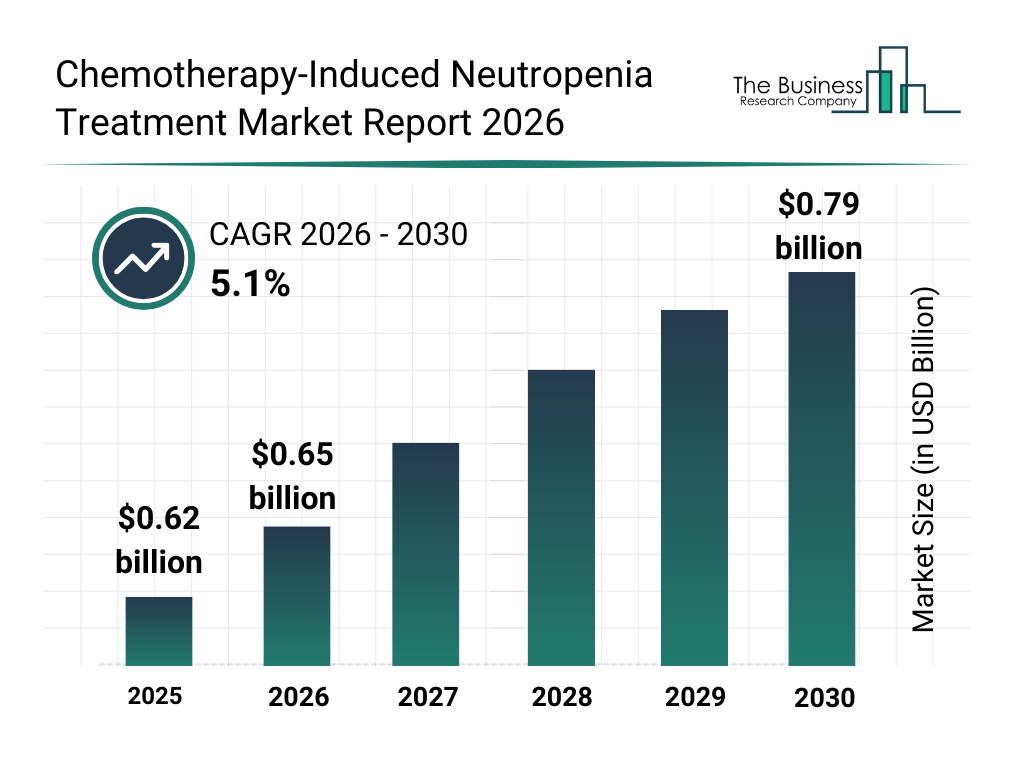
The chemotherapy-induced neutropenia treatment market has demonstrated solid expansion in recent years. It is projected to increase from $0.62 billion in 2025 to $0.65 billion in 2026, reflecting a compound annual growth rate (CAGR) of 5.3%. This growth during the historical period can be linked to the rising incidence of chemotherapy-induced neutropenia, the widespread use of intensive cancer treatment approaches, availability of colony-stimulating factors, advancements in clinical monitoring, and the expansion of oncology care centers.
Download a free sample of the chemotherapy-induced neutropenia treatment market report:
https://thebusinessresearchcompany.com/sample_request?id=14052859&type=smp&name=Chemotherapy-Induced%20Neutropenia%20Treatment%20Market%20Report%202026&utm_source=EINPresswire&utm_medium=Paid&utm_campaign=Nov_PR
Looking ahead, the market is expected to maintain strong momentum, reaching $0.79 billion by 2030 at a CAGR of 5.1%. Factors driving this forecasted growth include broader adoption of long-acting growth factors, increasing focus on managing neutropenia in outpatient settings, rising use of biosimilar granulocyte-colony stimulating factors (G-CSF), enhanced investment in infection prevention strategies, and progress in immunomodulatory therapy options. Key trends anticipated in the coming years involve the growing use of prophylactic G-CSF therapy, earlier intervention treatment models, greater emphasis on reducing infection risk, expansion of personalized neutropenia management, and improved monitoring of white blood cell counts.
Understanding Chemotherapy-Induced Neutropenia Treatment and Its Benefits
Chemotherapy-induced neutropenia treatment refers to medical interventions aimed at patients experiencing a reduction in white blood cells following chemotherapy. The primary goal is to shorten the duration and lessen the severity of neutropenia, thereby preventing infections. Treatment typically includes administering growth factors and adjusting chemotherapy doses as needed. Early intervention is critical as it supports adherence to chemotherapy schedules and improves overall patient outcomes by minimizing complications related to low white blood cell levels.
View the full chemotherapy-induced neutropenia treatment market report:
https://thebusinessresearchcompany.com/report/chemotherapy-induced-neutropenia-treatment-global-market-report?utm_source=EINPresswire&utm_medium=Paid&utm_campaign=Nov_PR
Rising Cancer Rates as a Major Driver of Market Demand
One of the foremost forces fueling growth in the chemotherapy-induced neutropenia treatment market is the increasing prevalence of cancer worldwide. Cancer encompasses a broad group of diseases marked by uncontrolled cell growth and spread. The rise in cancer diagnoses is closely tied to aging populations since older adults face higher risks due to accumulated genetic mutations and weakened immune responses over time. Neutropenia treatment plays a vital role in cancer care by lowering infection risks through immune system support, allowing patients to continue chemotherapy with fewer interruptions. This approach improves treatment effectiveness and enhances patient safety and quality of life. For example, in July 2024, the Australian Institute of Health and Welfare reported that around 165,000 Australians were newly diagnosed with cancer in 2023, averaging more than 450 new cases daily, with males accounting for approximately 55%. Such statistics highlight how increasing cancer incidence is driving demand for neutropenia therapies.
North America’s Leadership and Asia-Pacific’s Rapid Growth Prospects
In 2025, North America held the largest share of the global chemotherapy-induced neutropenia treatment market, reflecting the region’s advanced healthcare infrastructure and high cancer prevalence. However, the Asia-Pacific region is expected to experience the fastest growth during the forecast period. This rapid expansion is due to increasing healthcare investments, rising cancer diagnosis rates, improved access to oncology treatments, and growing awareness about neutropenia management. The market report covers multiple regions including Asia-Pacific, South East Asia, Western Europe, Eastern Europe, North America, South America, the Middle East, and Africa, providing a comprehensive global perspective on this evolving market.
What’s new in our 2026 market reports:
• Market attractiveness scoring and analysis
• Total addressable market (TAM) analysis
• Company scoring matrix graphics and tables
• Excel dashboards
• Market hotspots infographics
• Key technologies and future trends
• Updated graphics and tables
Speak With Our Expert:
Saumya Sahay
Americas +1 310-496-7795
Asia +44 7882 955267 & +91 8897263534
Europe +44 7882 955267
Email: marketing@tbrc.info
The Business Research Company – www.thebusinessresearchcompany.com
Follow Us On:
• LinkedIn: https://in.linkedin.com/company/the-business-research-company“
Oliver Guirdham
The Business Research Company
+44 7882 955267
info@tbrc.info
Visit us on social media:
LinkedIn
Facebook
X
Legal Disclaimer:
EIN Presswire provides this news content “as is” without warranty of any kind. We do not accept any responsibility or liability
for the accuracy, content, images, videos, licenses, completeness, legality, or reliability of the information contained in this
article. If you have any complaints or copyright issues related to this article, kindly contact the author above.

Media gallery