EXETER, New Hampshire, October 31, 2026 – Auto Collision Center of Exeter is advising owners of newer, accident-damaged vehicles to compare paint treatments by damage depth and expected finish before approving repairs. The consumer advisory addresses a practical decision: whether a collision scrape can receive surface correction or requires refinishing. The auto body shop recommends evaluating the damaged coatings rather than choosing work based on scratch size alone.
Damage Depth Determines Treatment Options
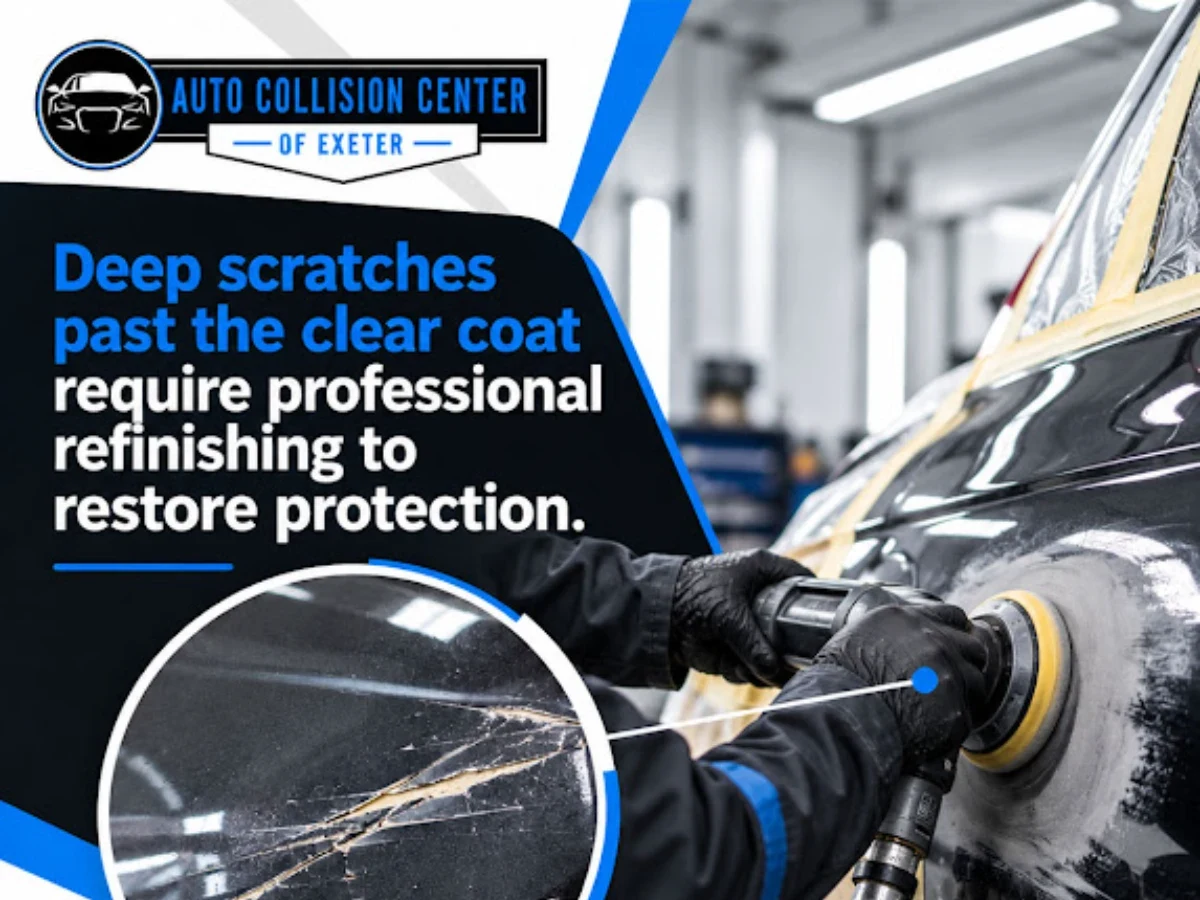
Collision paint damage may require refinishing when scratches extend beyond the clear coat or remove color. Clear coat is the transparent outer coating on many automotive finishes. Surface correction works within existing coatings; refinishing applies replacement coatings across a prepared repair area.
Minor clear-coat scratches can respond to sanding, compounding, and polishing. Deeper scratches may require repainting a portion of the vehicle. Auto body damage repair begins with evaluation. This helps in selecting a treatment. Not every visible scrape needs paint. A treatment decision also needs a clear description of the desired result. Owners should distinguish reduced visibility from restoring the damaged area’s finish.
Scratch length alone cannot resolve that decision. A short mark may penetrate the color layer, while a longer surface mark may remain within clear coat. Owners should request an explanation of the affected finish before comparing proposed repairs.
“Before we recommend paintwork, we evaluate the damaged finish and discuss what the customer expects,” said General Manager Bryan Dinger. “A small mark does not automatically mean a small treatment will deliver the finish the customer wants.”
Touch-Up and Refinishing Serve Different Purposes
Touch-up and refinishing should be compared by the damage each treatment addresses. Adding paint to a localized spot may leave an edge or texture. Refinishing treats a defined area after preparation, rather than covering only the visible mark.
|
Treatment |
Decision point |
|
Surface correction |
Can existing clear coat be corrected without removing too much sound finish? |
|
Touch-up |
Would a visible spot repair meet the owner’s expectations? |
|
Refinishing |
Does the damaged coating require preparation and replacement paint? |
For example, an owner may accept a visible touch-up on an isolated chip. A broader door scrape may require a different treatment. These examples illustrate finish expectations; the vehicle’s condition determines the recommendation.
For drivers seeking affordable auto body repair, proposals should cover comparable work. A lower price for a limited application cannot be directly compared with a prepared-area refinish without reviewing the difference.
Repair Proposals Should Define the Paint Scope
A paint proposal should identify the treatment and the areas receiving coatings. The auto body repair shop recommends that owners clarify the scope before authorization, including the expected result.
Useful questions include:
-
Why is refinishing proposed instead of surface correction?
-
Which panels or sections will receive replacement coatings?
-
What limitations apply to the proposed finish?
Auto Collision Center of Exeter discusses insurance or self-pay options before repairs. Its paint department uses RM paint products in a heated downdraft booth. Prepared repair areas receive primer and paint, with polishing performed when needed. Repair procedures follow original equipment manufacturer requirements and I-CAR guidance.
“Customers should know what the proposed paintwork covers before approving repairs,” Dinger said. “We explain the options so the decision reflects the damaged finish and the work required.”
Arrange an Evaluation Before Approving Paintwork
Owners seeking car body repair in Exeter, NH, can schedule a visual estimate before dropping off a vehicle for repairs. Contact Auto Collision Center of Exeter at (603) 772-0214 or accofexeter@gmail.com to discuss collision-related paint damage and arrange an appointment.
About the Company
Auto Collision Center of Exeter is a family-owned collision repair business that opened in January 2023. The company holds I-CAR Gold Class recognition. Bryan Dinger brings more than twenty years of auto collision repair experience and Universal Technical Institute training. The business offers a limited lifetime warranty covering repairs and paintwork for as long as the customer owns the vehicle.
Media Contact
Bryan Dinger,
General Manager, Auto Collision Center of Exeter
58 Winter St,
Exeter, NH 03833
Phone: (603) 772-0214
Email: accofexeter@gmail.com
Website: https://accofexeter.com/
Media gallery