
Key Takeaways
- DIY termite treatments often fail because store-bought products cannot reach the full colony hiding underground or deep inside wood
- Misidentifying termites for ants or applying weaker consumer-grade termiticides incorrectly can worsen an infestation instead of solving it
- Termite treatment costs typically run between $700 and $2,000, though severe cases needing fumigation can climb to $5,000 or more
- Warning signs like mud tubes, discarded wings, and hollow-sounding wood should prompt a professional inspection before damage spreads further
- Connor’s Pest Pros points out that licensed treatment targets the entire colony rather than just the termites a homeowner can see
Termites cause billions of dollars in damage every year, and a lot of that destruction traces back to a homeowner trying to handle the problem with a bottle of spray from the hardware store. It sounds like a quick fix, but termite colonies are built to survive exactly that kind of surface-level attack. Understanding why these attempts fall short can save a home from years of hidden, expensive damage.
Why Store-Bought Termiticides Can’t Win
Consumer-grade termiticides sold on store shelves are regulated by the EPA to be far weaker than the products licensed pest control companies use. That difference in strength is not an accident. Because these chemicals could pose risks if mishandled, the products available to the general public are diluted and restricted, which limits how deeply they can penetrate wood or soil.
A termite colony living beneath a home’s foundation does not respond to a spray that only works on contact. Professional soil treatments for subterranean termites often require applying 100 to 300 gallons of termiticide at carefully measured rates across an entire foundation footprint, using equipment that simply is not available for home use. Professional pest control companies, like Connor’s Pest Pros, treat termite infestations with this kind of colony-wide approach, applying termite treatment methods designed to reach nests that store-bought products never touch. Without that scope, a homeowner ends up treating symptoms while the real source of the damage keeps growing untouched.
Colonies Hide Where DIY Can’t Reach
Millions of Termites, One Missed Spot
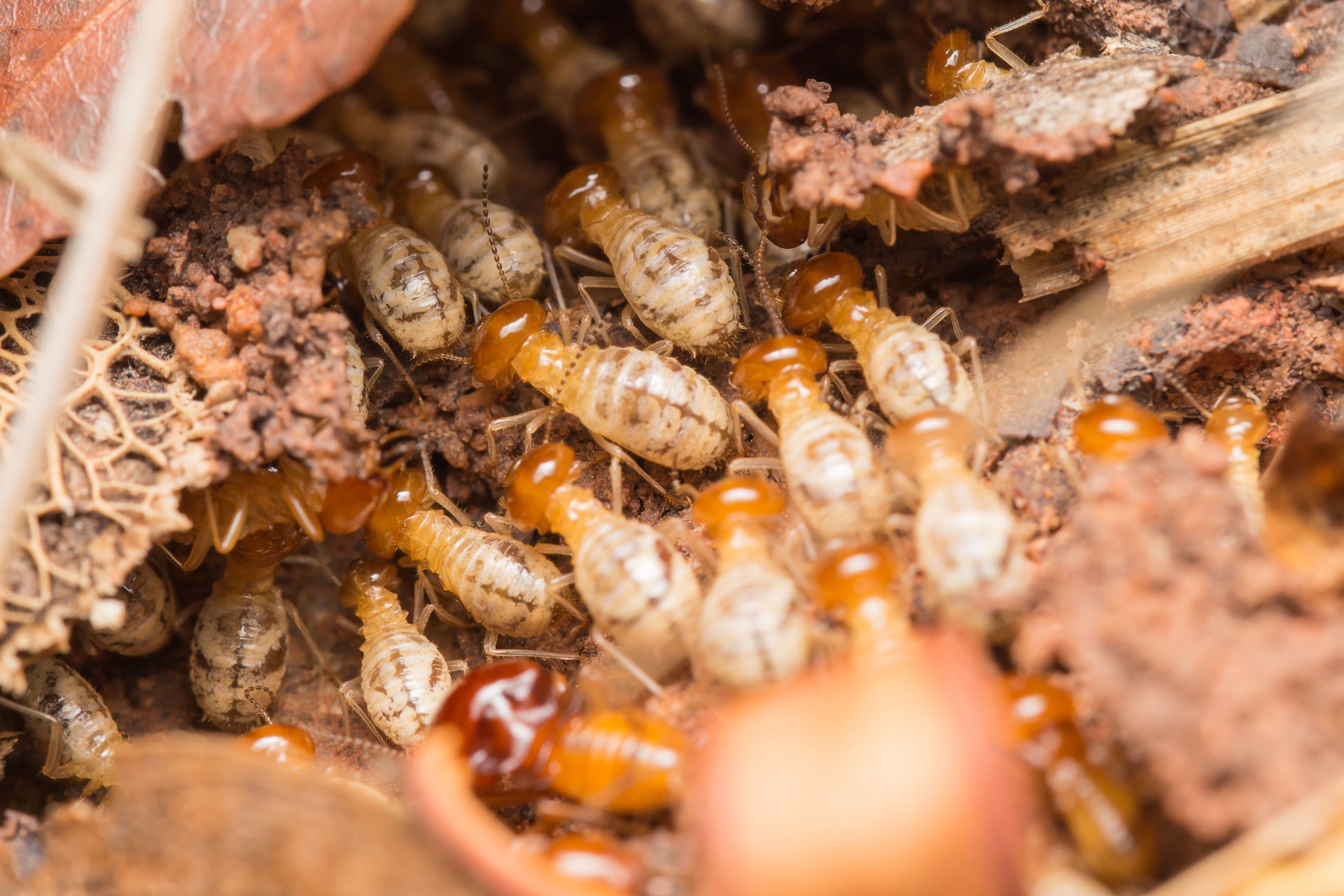
A single termite colony can contain millions of individual insects, and most of them stay hidden in soil, wall voids, or deep within structural wood where nobody ever sees them. Spraying a few visible termites near a windowsill or porch board might feel like progress, but it barely touches what’s actually living inside the walls. The colony’s queen, workers, and reproductive members typically stay protected far from where the damage first becomes visible, so treating only the spot where termites were spotted rarely affects the population as a whole.
This hidden nature is part of what makes termites so destructive in the first place. They can chew through support beams, flooring, and drywall for months or even years before a homeowner notices bubbling paint or a soft spot in the floor. By the time visible signs show up, the infestation has often already spread well beyond the area being treated with a DIY product.
Misidentifying Termites vs. Ants
One of the most common mistakes homeowners make is confusing termites with flying ants, and the two can look alike at a glance. Termite swarmers carry wings of roughly equal length and antennae that stay straight, while winged ants have noticeably longer front wings and antennae that bend sharply. Getting this wrong means applying the wrong treatment entirely, wasting time and money while termites continue feeding undisturbed.
This misidentification problem extends to the type of termite as well. Drywood, Formosan, subterranean, and dampwood termites all behave differently and require different treatment strategies, so a product designed for one species may do nothing against another. Without training in termite behavior and biology, it becomes difficult for a homeowner to know exactly what they’re dealing with, let alone how to eliminate it.
The Hidden Dangers of DIY Chemicals
Toxic Exposure Risks to Your Family
Termiticides sold for home use are still pesticides, and mishandling them can create real health risks. Exposure to these chemicals has been linked to headaches, dizziness, respiratory irritation, and in more serious cases, neurological symptoms. Because these products are applied inside or around the home, family members and pets can come into contact with residue on floors, walls, or soil near the foundation.
The EPA notes that termiticide application is best left to trained professionals precisely because of these risks. Pest management professionals understand label directions, safe concentrations, and reentry timelines, which reduces the chance of accidental exposure. A homeowner working without that training is far more likely to apply a product in a way that puts the household at unnecessary risk.
Overapplication and Chemical Mixing Hazards
Frustration often leads to overapplication. When the first treatment doesn’t seem to be working, it’s tempting to apply more product or mix multiple chemicals together to boost effectiveness. This can create hazardous combinations and result in far more chemical exposure inside the home than any label ever intended.
Improper mixing and application can also mean missing key entry points altogether. Termites travel through mud tubes, cracks in foundations, and gaps around utility lines, and treating only the obvious areas leaves plenty of routes for them to keep accessing the structure. The result is a home with more chemical residue and still no real progress against the infestation.
A False Sense of Security
Surface Kills, Surviving Nests
Many DIY termite products do kill termites on contact, which can create the impression that the problem is solved. Sprays and foams work by dehydrating or poisoning insects they touch directly, but that only affects the termites exposed to the product at that moment. The nest supporting those termites, often located deep underground or inside a wall cavity, continues operating normally.
This is where DIY treatment becomes genuinely misleading. A homeowner sees fewer termites near the treated area and assumes the infestation is under control, when in reality the colony simply shifts its feeding pattern elsewhere in the structure.
Scattering Colonies Instead of Eliminating Them
Disturbing a colony without eliminating it can actually make things worse. When termites sense a threat in one part of their nest, some colonies respond by relocating or splitting into smaller groups that spread to new areas of the home. What started as a single, somewhat contained infestation can turn into multiple pockets of activity throughout the structure.
This scattering effect is one of the most frustrating outcomes of DIY treatment because it undoes the very containment a homeowner was hoping to achieve. Instead of one nest to eliminate, a professional called in later may find termite activity in several previously untouched areas.
When Delay Turns Costly
Treatment Costs Climb With Severity
Termite treatment costs rise sharply as an infestation grows. Minor infestations caught early can often be treated for $250 to $1,000, but moderate infestations involving multiple parts of a home typically run $1,000 to $3,000. Severe infestations that have caused structural damage may require fumigation or heat treatment costing $2,000 to $8,000, according to This Old House. Overall, termite treatment nationally tends to fall between $700 and $2,000, though fumigation for aggressive species like Formosan or drywood termites can reach $5,000 or more.
A termite inspection alone typically costs between $75 and $325, and catching an infestation at that stage is almost always cheaper than waiting. Homeowners who add a termite bond or protection plan, which includes regular inspections and treatments, can expect to pay an additional $500 to $2,000, but that ongoing coverage often prevents the far larger expense of a full-blown infestation.
Repairs That Dwarf the Original Problem
Treatment cost is only part of the equation. Severe infestations can lead to sagging floors, buckling walls, and rotting support beams, and repairs for this kind of structural damage can push total costs well above $10,000 when combined with treatment. A DIY approach that delays real treatment for months, or even a year, gives termites exactly the kind of uninterrupted time they need to move from minor cosmetic issues to serious structural threats.
This is really the core financial risk of DIY termite control. A homeowner applies a product to visible entry points, assumes the issue is resolved, and moves on with life, only to encounter significant hidden damage much later. What looked like a low-cost solution at first ends up costing far more once repairs enter the picture.
What Sets Professional Treatment Apart
Recognizing the Warning Signs Early
Knowing what to look for makes a real difference in catching termite activity before it spreads. Common warning signs include:
- Bubbling paint or peeling wallpaper
- Buckling or blistering wood flooring
- Damaged drywall or dipping ceilings
- Discarded termite wings near windowsills or doors
- Mud tubes running along foundation walls or support piers
- Wood that sounds hollow when tapped
Spotting any of these signs early is the best chance a homeowner has of limiting both treatment costs and repair bills.
Licensed Tools and Colony-Wide Solutions
Professional termite treatment differs from DIY methods in a few key ways. Licensed technicians carry out thorough inspections designed to locate hidden activity that would otherwise go unnoticed, rather than just treating the spot where termites happen to be visible. They also have access to specialized products and equipment that are not sold to the public, along with the training needed to apply them at effective concentrations without unnecessary risk. Colony-wide elimination, rather than treating only what’s visible, is the real difference between a treatment that lasts and one that only buys a few months of quiet.
Long-term prevention plans round out the professional approach, since termites can return to a property that was treated once but never protected going forward. This combination of inspection, targeted application, and ongoing monitoring is difficult to replicate with a single trip to the hardware store.
The Bottom Line on DIY Termite Control
Termites are patient, hidden, and capable of causing damage that homeowners rarely notice until it becomes serious. Store-bought products can knock back a few visible insects, but they consistently miss the larger colony driving the infestation, and mishandling them introduces health risks that outweigh any savings. When early signs appear, a licensed inspection remains the most reliable way to catch the problem before it turns into a repair bill that dwarfs the original treatment cost. For homeowners weighing next steps, scheduling a professional termite inspection and treatment early on tends to be far less costly than waiting to see how bad things get.
Connor’s Pest Pros
5410 Port Royal Rd
Springfield
VA
22151
United States


