Originally Posted On: https://www.ucanpack.com/blog/post/what-warehouse-teams-learned-after-switching-to-small-shipping-boxes
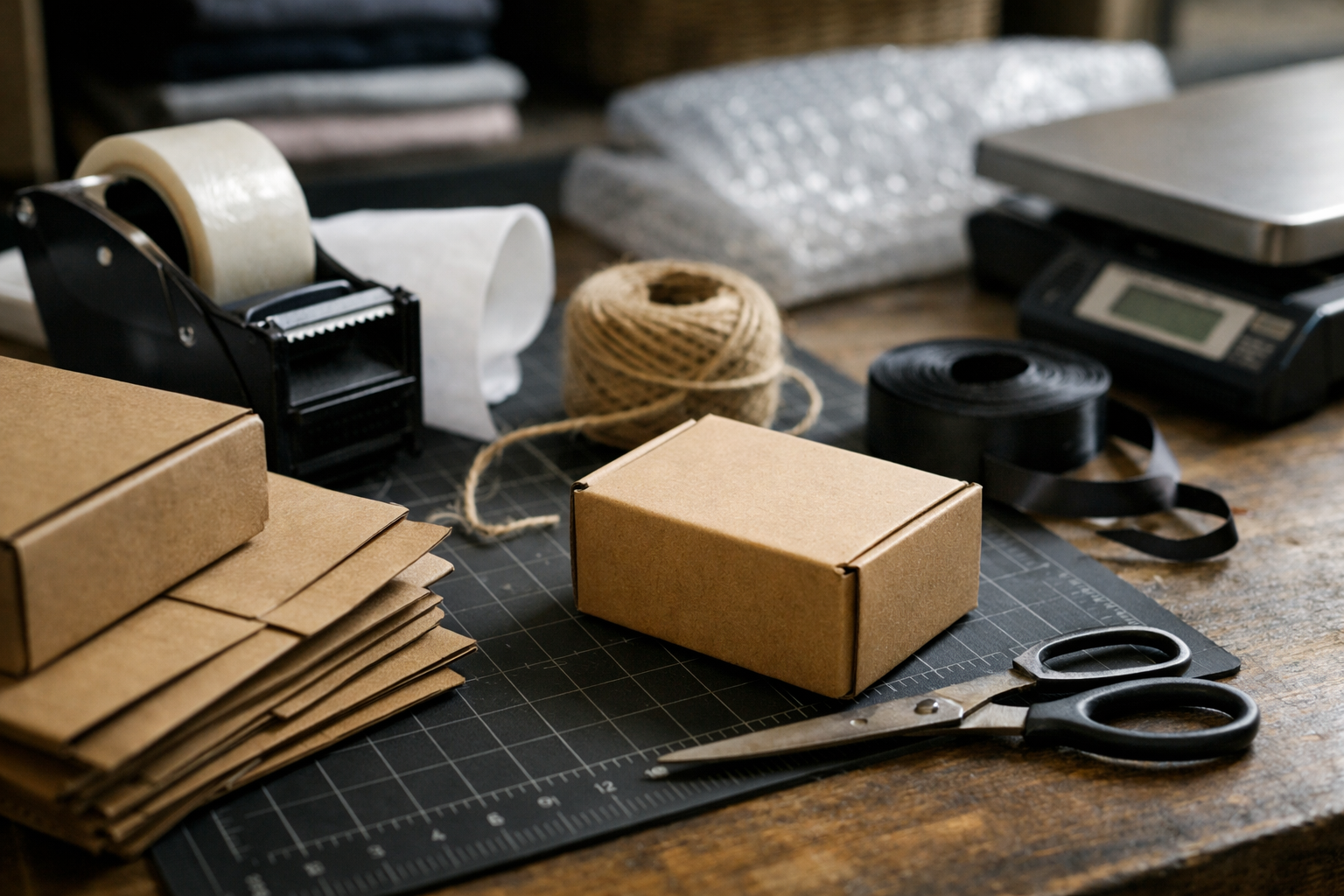
Key Takeaways
- Right-size small shipping boxes to the product, not the habit. A 6x4x3 corrugated box that cuts void fill by half can save more than a cheaper but oversized carton once shipping and damage are factored in.
- Match box style to the order. Single-wall cardboard boxes work well for apparel, accessories, cosmetics, and gifts, while double-wall only makes sense when the product has real crush risk or stacking pressure.
- Compare packaging against plastic mailers, crate-style options, and insulated packaging before buying. Small shipping boxes beat the wrong material fast, but soft goods in a flat mailer often ship cheaper and cleaner.
- Test dimensions before you buy in bulk. Sample a few box sizes like 4x4x2, 6x4x3, 7x5x2, and 8x6x4 so the packing team can check fit, texture, closure, and shipping cost with actual products.
- Tighten warehouse flow with fewer SKUs and better packing notes. When box-sizing, product codes, and order sync line up, pick-and-pack gets faster, and the team makes fewer useless packing mistakes.
- Buy small shipping boxes in the quantity that matches your order mix. Bulk pricing helps, but it only works if the boxes are flat, stored well, and used before the next product shift leaves them sitting there.
One damaged order can wipe out the savings from 20 careful ones. That’s why small shipping boxes have become a real talking point for warehouse teams shipping apparel, accessories, cosmetics, and gifts. The fit matters. So does the corrugated box style, the wall texture, and the actual dimensions printed on the carton.
In practice, teams don’t switch to smaller boxes because it sounds tidy. They do it because oversized packaging burns through void fill, drives up parcel weight, and leaves product codes, packing notes, and carton picks out of sync. A 6x4x3 box isn’t just a smaller box. It can be the difference between a clean pack-out and a box that ships half-empty with tape jobs that look useless. And when orders move fast, that gap shows up in labor, damage claims, and customer complaints before anyone notices the trend.
Why small shipping boxes changed day-to-day packing for ecommerce teams
Smaller boxes stopped the drift. Once teams switched to small shipping boxes, packing tables got faster, and the pile of useless filler dropped fast.
Here’s the change most pick-and-pack crews notice first: fewer void-fill mistakes and tighter box-sizing for lightweight products. A 6x4x2 mailer for a cosmetic set doesn’t need crumpled paper stuffed into every corner. It needs the right dimensions, a flat pack-out flow, and corrugated that holds shape without wasting ground shipping on air.
Fewer void-fill mistakes and tighter box-sizing for lightweight products
Single-wall cardboard works well for apparel, accessories, and small gift items under about 3 lb. The honest answer is that a bad fit costs twice — extra texture from crushed filler and extra postage from oversize package code creep. Teams that sort by box-sizing, then sync product size to carton size, usually cut packing errors within a week.
Better fit for apparel, accessories, cosmetics, and gift items
For shirts, compact candles, cosmetics, and small boxed gifts, small corrugated boxes and small mailer boxes keep the item from rattling around like a bike part in a crate. A small cube boxes setup works best for bundled sets, while small packaging boxes make sense for retail-style presentation. UCanPack’s sizing range helps teams match product, package, and delivery method without guessing (or over-taping everything).
How corrugated wall texture and dimensions affect shipping cost
Wall texture matters. E-flute prints cleanly and keeps dimensions tight; B-flute gives more crush resistance if the box is getting tossed through a rough sorter. A box that’s 1 inch too tall can push a small parcel into a higher rate band — and that jump shows up on every order, even the ones that seem too small to matter.
Picking the right cardboard box style for fast delivery and lower damage rates
About 7 out of 10 packaging misses trace back to box sizing, not the product itself. That’s the awkward part. Small shipping boxes fix a lot of that because they cut empty space, use less tape, and keep the package from flexing in transit.
Warehouse teams usually split their lineup into small corrugated boxes for rigid items, small mailer boxes for DTC orders, and small cube boxes for awkward shapes that need equal clearance on all sides. UCanPack sees the same pattern across apparel, cosmetics, and gifts: the right box style trims damage claims faster than adding more filler.
Single-wall versus double-wall for small package protection
Single-wall corrugated works for light products under 5 lb—think accessories, folded apparel, or a booster pack of samples. Double-wall earns its keep for heavier jars, a boxed wine set, or anything with a hard edge that can punch through thinner board. Realistically, if the carton will be stacked for ground delivery, double-wall buys extra crush resistance. That’s the tradeoff.
White, Kraft, and custom-printed boxes for different product lines
White boxes signal clean, cosmetic, or gift-ready packaging. Kraft is practical and has lower waste. Custom-printed boxes make sense only when the package itself is part of the sell (not for every SKU, because that gets expensive fast). For small packaging boxes, brands often mix all three by product line. Works better. Keeps inventory sane.
When flat mailers beat larger shipping cartons
Flat mailers win when the product is thin and doesn’t need room to move—tees, scarves, flat accessories, even some books. Why pay for a large box when the item’s profile is flat and the extra air just invites damage? Simple question, simple answer.
Worth pausing on that for a second.
- Use flat mailers for soft goods and low-fragility items.
- Use small shipping boxes for rigid goods and kits.
- Keep one backup size on hand for odd orders.
The honest answer is this: box-sizing choices save more money than squeezing another cent out of tape.
Small shipping boxes vs plastic mailers, crates, and insulated packaging
Write this section as if explaining to a smart friend over coffee — casual but accurate and specific. Warehouses that switched to small shipping boxes found one thing fast: the box choice has to match the product, not the habit. For apparel, accessories, and gifts, a flat corrugated mailer usually beats a plastic bag because it stacks better, prints better, and doesn’t arrive looking crushed. The link between fit and damage is plain.
Here’s where small mailer boxes make sense: rigid jewelry packs, cosmetics, small cube boxes for kits that need a clean unboxing. They’re also a better fit than small corrugated boxes when the product has corners that can scuff (think compacts, boxed fragrance, or a booster set). Short run, low waste. That’s the win.
Where plastic mailers still make sense—and where they don’t
Plastic mailers still work for soft goods that don’t care about texture or crush. T-shirts, socks, and lightweight returns are fine. But once the package needs brand value, structure, or a white print surface, plastic starts looking cheap. It also leaves you with less box-sizing flexibility.
Why oversized crate-style packaging wastes space for soft goods
Crate-style packaging is overkill for anything soft. It eats cubing space on the ground, slows picking, — turns a small product into a large shipment code the carrier prices higher. If the item fits in small packaging boxes, sending it in a crate is money down the drain.
Insulated packaging only helps when the product actually needs temperature control
Insulated packaging has a job. Supplements, cosmetics with heat-sensitive formulas, and anything that can’t sit in a hot truck for 24 hours may need it. But for most e-commerce boxes, insulated packing is a useless weight. Use it only when the product needs temperature control. For everything else, small shipping boxes keep delivery tighter, cleaner, and cheaper.
For teams comparing suppliers, UCanPack’s catalog makes it easier to sync size, wall texture, and print needs without guessing.
Most people skip this part. They shouldn’t.
What warehouse managers watch after the switch: labor, storage, and order accuracy
A team fills 500 apparel orders a day, and the old box mix keeps slowing everything down. Once they switch to small shipping boxes, the change shows up fast: shorter walks, fewer grabs from the shelf, fewer pack-out mistakes. Simple. And very visible.
Faster pick-and-pack flow with fewer SKUs on the shelf
With fewer box sizes, pickers stop hunting through stacks of cardboard and flat cartons that all look close enough. That saves seconds on every order, then minutes by the hour. Small mailer boxes and small corrugated boxes also cut the filler problem, which helps with a package that ships cleanly instead of feeling stuffed and useless.
Better sync between box sizes, product codes, and packing notes
Good box-sizing starts with dimensions tied to the product code, not guesswork. If a lipstick kit, a phone case, and a jewelry set each map to one box code, the packer doesn’t need to ask which white or black box to use (and that note disappears from the bench). UCanPack sees this a lot with small packaging boxes and small cube boxes small cube boxes chosen for tight-fit orders.
Lower parcel weight, cleaner scan data, and fewer useless shipments
Smaller corrugated builds usually mean less dead air, less tape, and less weight at the ground rate. That matters for apparel, accessories, and cosmetics. It also cuts bad scan data when the box dimensions match the item instead of triggering a larger package code. Less waste. Fewer surprises.
Warehouse managers watch one thing after another: labor minutes, storage footprint, and mis-ship rate. If those three move the right way, the switch was worth it.
How to choose small shipping boxes that fit real orders and transactional search intent
Size wins or loses the sale.
- 4x4x2 works for flat accessories, samples, and inserts that don’t need much void fill. It’s a truly small shipping box size for light, low-profile orders.
- 6x4x3 fits cosmetics, jewelry, and folded apparel pieces better than a tiny cube, and it usually cuts rattling without wasting cardboard.
- 7x5x2 is the practical pick for mailers, cards, and slim gift sets. It keeps the package looking tight instead of stuffed.
- 8x6x4 handles a little more depth for bundles or boxed sets. If the product moves more than a finger’s width, the box is too large.
Warehouse teams also check the floor and wall texture. Single-wall corrugated is fine for most light shipping, but a weak box-sizing choice can turn a “cheap” order into a useless return. For white or black packaging, the outer finish matters less than fit and fold quality.
Before bulk buying, test 3 samples with the real product, one drop from 30 inches, and one ground-level stack check. If the pack bows, crushes, or leaves the item sliding, it’s wrong. That’s the honest answer.
For buyers comparing small packaging boxes, small corrugated boxes, small mailer boxes, and small cube boxes, the best move is to reorder only after the sample passes. Then buy in case quantities when monthly volume is steady, usually after 100-200 units, and check dimensions, code, and carton count before checkout. A few extra minutes save a lot of bad delivery notes later.
Frequently Asked Questions
How do you get free small boxes for shipping?
Free small shipping boxes usually come from office supply recycling programs, product wholesalers, or carrier pickup sites that hand out certain packaging materials. The catch is fit and strength — free boxes are often the wrong dimensions, beat up, or too weak for e-commerce shipping. If the product is light and the box is clean, fine. If not, that “free” box can cost more in damage and returns.
What is the smallest size box for shipping?
The smallest size depends on the carrier — the product, but in practice, a tiny box like 4x4x2 or 4x4x4 is common for jewelry, cosmetics, samples, and small accessories. For small shipping boxes, the real answer is the smallest size that still leaves room for the product and a little protection. Too tight is a problem. Too loose is a waste.
Does Dollar Tree have small boxes for shipping?
It often carries small cardboard boxes, but shoppers need to check the wall thickness, closure style, and whether the box is meant for storage or actual shipping. A box that works for a desk drawer isn’t always good for ground delivery. For light products, it can be fine. For anything fragile, it’s usually a gamble.
Are small boxes free at USPS?
Some USPS Priority Mail boxes are free, but they’re only meant for Priority Mail shipments and don’t fit every product or price point. If the package is going ground or the item is a better fit for custom-sized small shipping boxes, free postal boxes may be the wrong tool. Free doesn’t help if the dimensions force you into extra filler or a higher postage tier.
How do you choose the right dimensions for small shipping boxes?
Measure the product first, then add enough room for protection and easy packing — usually 1/8 inch to 1 inch on each side, depending on the item. Apparel can run in a flatter box, while cosmetics or candle sets may need more headspace. Bad box-sizing is where sellers burn money. Too much empty space means wasted corrugated, more dunnage, and a box that feels sloppy.
Are white small shipping boxes better than brown ones?
Neither is automatically better. White boxes look cleaner — print well, while brown corrugated boxes hide scuffs better and usually fit a plain, kraft-style brand. For small ecommerce sellers, the right choice comes down to presentation, texture, and how the package will be handled in delivery. A white box can look sharp. A brown box can look tougher.
Simple idea. Harder to get right than it sounds.
What flute or wall type should small shipping boxes use?
For lightweight items, single-wall corrugated is usually enough, especially with E-flute or B-flute. If the product is fragile, the box gets stacked hard, or the shipment goes through rough ground handling, a stronger wall makes sense. A thin box that looks pretty but crushes in transit is useless.
Can small shipping boxes be used for gifts as well as e-commerce orders?
Yes, and a lot of sellers do exactly that.
Small shipping boxes work well for gifts, subscription inserts, promotional packs, and product launches because they give structure without making the package bulky. If the box opens neatly and holds the item snugly, it does double duty — shipping and presentation.
How many small shipping boxes should a seller buy at once?
For a business shipping 50 to 1,000 orders a month, it usually makes sense to buy at least one to three months of volume in the most common size. That cuts unit cost — reduces the risk of running out midweek. The mistake is buying too many sizes and turning the storage shelf into a cardboard crate yard. Start with the box sizes that cover the most orders.
What are the best uses for small shipping boxes?
They’re best for lightweight products like apparel accessories, cosmetics, candles, small electronics, samples, and boxed gift sets. They’re not a good choice for big, loose items that need room to move or for heavy products that need more crush resistance. For small items, a well-sized corrugated box is better than a padded mailer when the seller wants more protection and a cleaner unboxing experience.
Worth pausing on that for a second.
The switch to small shipping boxes changes more than carton size. It tightens packing routines, trims wasted dunnage, and cuts the chance that lightweight items arrive rattling around in too much space. For apparel, accessories, cosmetics, and gifts, that usually means cleaner presentation and less damage. Plain and simple.
Warehouse teams also learn fast that box choice ripples through the whole operation. Fewer box sizes on the shelf means fewer picker mistakes. A better fit means better scan data and less dead weight in the parcel stream. And picking the right wall strength matters more than people think, because a flimsy box that saves a few cents can cost far more in returns and re-shipments. That trade-off shows up quickly.
The next step is practical: measure the actual products, compare the four or five sizes used most often, and test samples before placing a bulk order. Do that before the busy week hits. Not after.
{
“@context”: “https://schema.org”,
“@type”: “LocalBusiness”,
“name”: “UCANPACK”,
“address”: {
“@type”: “PostalAddress”,
“streetAddress”: “753A Tucker Rd”,
“addressLocality”: “Winder”,
“addressRegion”: “GA”,
“postalCode”: “30680”,
“addressCountry”: “US”
},
“telephone”: “1 201-975-6272”
}
UCANPACK
753A Tucker Rd
Winder, GA 30680
1 201-975-6272


