Needing a fraction of the data without sacrificing performance, Bloom is a “hypothesis-generating machine” that will accelerate research and new treatments
SEATTLE, WA, UNITED STATES, November 25, 2026 /EINPresswire.com/ — Imagine a world where everyone spoke the same language. Business and commerce would be more efficient, travel would be easier, and the opportunities for discovery would flourish. In a similar way, Bloom, a new AI model from the Allen Institute, is breaking down barriers and empowering researchers around the world to make breakthrough discoveries by creating a common scientific language. This language allows researchers to share and integrate findings to increase our collective understanding of life.
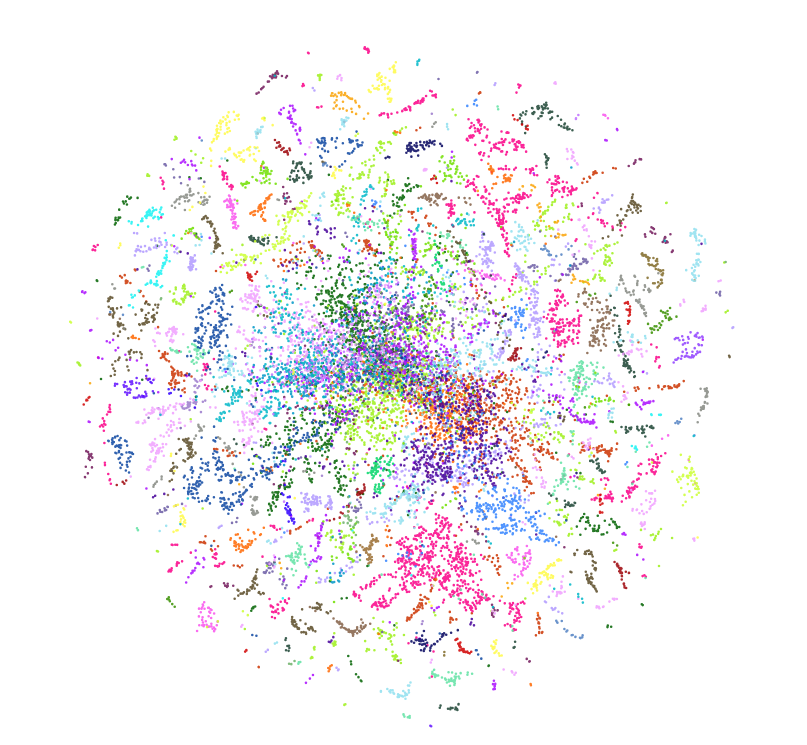
Bloom is an AI model that was trained on a comprehensive dataset capturing the diversity of the entire mouse brain at a cellular level. It specifically looked at chromatin accessibility (the parts of DNA that are “active”) and transcriptomics (the RNA fragments produced by specific active DNA regions). Bloom learned the relationship between these two measurements and, based on this, is able to connect the dots with other datasets from unrelated studies that measured completely different aspects of cells to tell researchers when these data are describing the same thing. For example, if a person created a dataset of cars by color, and another person, a dataset of cars by shape, Bloom could tell both when they were describing the same car. In this way, it is like a common language for researchers around the world to know when they are analyzing and describing the same type of cell, yet in different ways—for example, describing a cell based on its electrical firing properties as opposed to its gene expression. Drawing these connections is vital for advancing our understanding of biology.
“It’s an ambitious data integration project that allows researchers to import collective wisdom from studies in the community into their own research,” said Uygar Sümbül, associate investigator at the Allen Institute and one of Bloom’s designers. This shared wisdom will catalyze new hypotheses because scientists will have a richer context to understand neurobiology. “Through using Bloom, if I can say, ‘My cells match the cells in that other study,’ then I can infer properties for my cells that I did not directly measure. This could substantiate new scientific questions and lead to novel insights about the organization and function of cells in the brain.”
In this way, Bloom is building a cohesive understanding of the cells from fragmented datasets, putting together pieces of a puzzle to reveal a comprehensive view of life. “We are oriented towards learning a landscape from genome-wide descriptions of cells. And for that, there will only be more kinds of measurements to incorporate in the future,” said Rohan Gala, scientist at the Allen Institute and one of Bloom’s designers. “Bloom is a step in that direction, and it tackles an important piece of that complexity—that is, how could models work with vast and seemingly disparate descriptions of a cell?”
Bloom will also accelerate the pace of discovery and unlock insights that could lead to more treatments for disease. “When you collect so many heterogeneous datasets, each incomplete in its own peculiar way, and you want to know what else is known about the thing that you measured, this could serve as an interface for those translation tasks and lookup tasks,” said Gala.
[Proving that bigger is not always better]
One standout feature of Bloom was that it matched, and even outperformed, competing AI models while being trained on datasets that were orders of magnitude smaller. Whereas other models needed to train on profiles of hundreds of millions of cells to learn their 400–700 million parameters, Bloom needed only a fraction of that—around 300,000 cells and some 130 million parameters—roughly five times fewer, demonstrating that bigger may not necessarily be better and that choosing a diverse, high-quality dataset, and not simply a larger one, can drive performance. “Reading different editions of the same book ten times over doesn’t get you much more wisdom, but reading different books will,” said Sümbül.
This model efficiency could help address the significant energy consumption concerns around present-day AI. A less data-intensive model that doesn’t sacrifice performance would reduce energy consumption and be more time- and cost-effective.
Bloom was designed in collaboration with Amazon Web Services (AWS), which provided cloud computing infrastructure and helped set up the large-scale training framework.
“For nearly a decade, AWS and the Allen Institute have worked to expand open data for brain research, making world-class neuroscience accessible worldwide. The Bloom model is the next evolution, showing that smarter data, not simply more data, drives breakthrough science. We’re proud to support the Allen Institute with AWS domain specialists, infrastructure engineers, and compute and storage funding, freeing the team to focus on science and create a common language for brain cells,” said Rick Buettner, managing director of Global Nonprofits at Amazon Web Services. “Together, we’re turning datasets into faster discoveries and new paths toward treating devastating brain diseases.”
[Fueling hypotheses by making connections]
Another exciting feature of Bloom, particularly relevant for drug discovery, is that it is able to reveal connections between genes and distant regions of DNA, known as accessibility peaks, where the peaks may help regulate the activity of those genes in some way—for example, by increasing or decreasing their activity. “In that sense, we view Bloom as a hypothesis-generating machine,” said Sümbül. “When Bloom attends to particular gene-peak pairs much more than others that are accessible in that cell, such pairs could be playing an important biological role in determining the identity or function of that cell. Then, this suggests treating such genes and peaks as candidates for experimental manipulations, including for selective access to cells and for development of new therapies and drugs.”
In an era of big data where complex, petabyte-scale datasets conceal valuable troves of knowledge, tools like Bloom will play a critical role in unlocking the insights that could one day cure disease.
Peter Kim
Allen Institute
+1 206-605-9884
press@alleninstitute.org
Legal Disclaimer:
EIN Presswire provides this news content “as is” without warranty of any kind. We do not accept any responsibility or liability
for the accuracy, content, images, videos, licenses, completeness, legality, or reliability of the information contained in this
article. If you have any complaints or copyright issues related to this article, kindly contact the author above.

Media gallery