

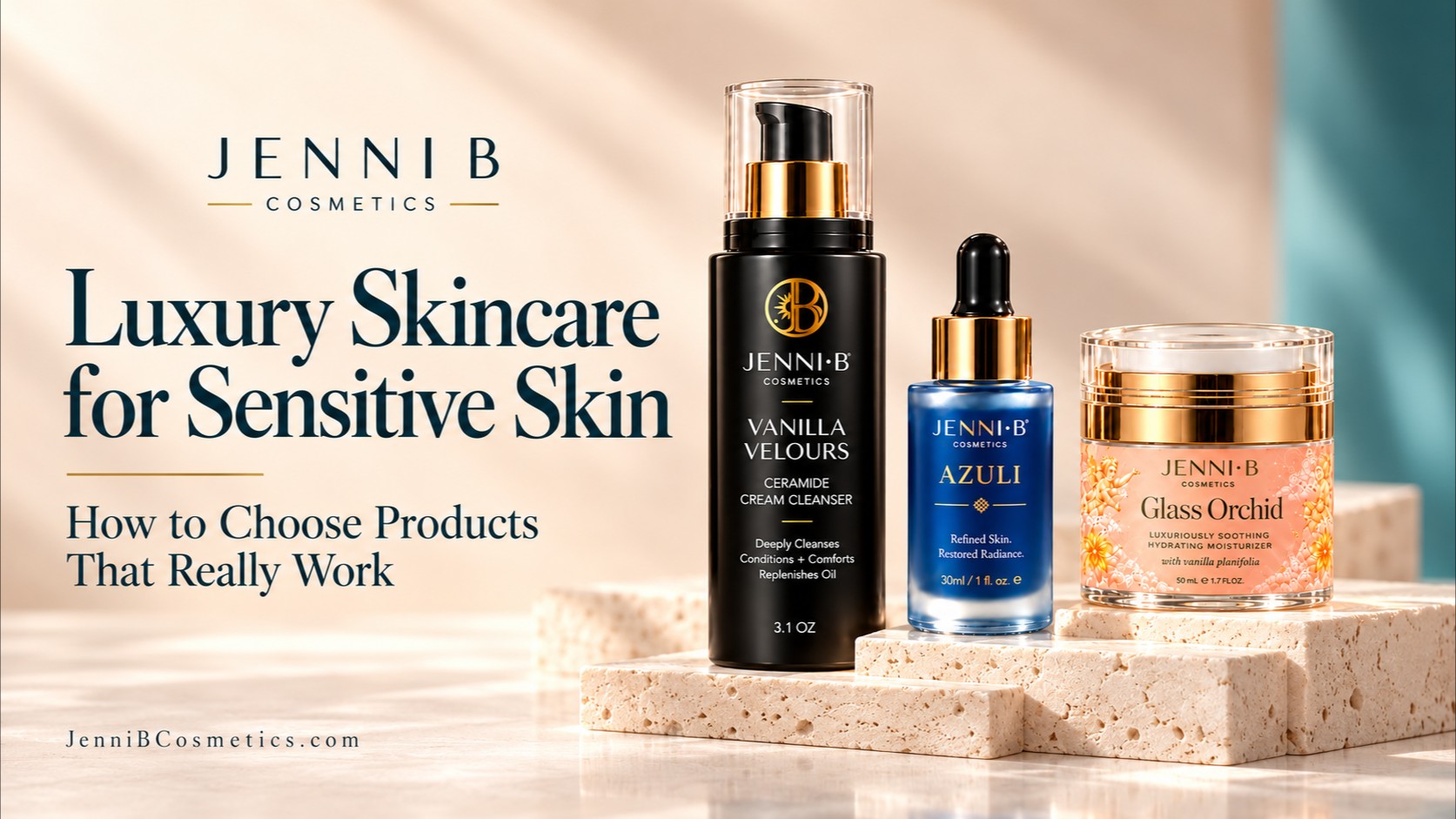
A $200 moisturizer can leave sensitive skin feeling worse than a $20 alternative. Luxury packaging, rare ingredients, and sophisticated marketing may suggest superior quality, but none guarantees that a formula will agree with your skin. For people dealing with dryness, redness, or irritation, the real value lies in what a product contains and how the skin responds.
“Healthy skin should never hurt,” says Jennifer Bradley, celebrity makeup artist and founder of Jenni B Cosmetics. Her philosophy points to an important consideration when choosing luxury skincare: a product’s effectiveness means little if its ingredients leave skin uncomfortable or irritated.
So, how can consumers distinguish genuinely useful luxury skincare from expensive promises?
Understand What Sensitive Skin Actually Needs
Sensitive skin is not a single skin type. Some people experience occasional tightness or stinging, while others deal with persistent redness, dryness, or reactions to particular ingredients.
These concerns can become more noticeable with age as changes in the skin’s moisture retention and barrier function contribute to discomfort.
The first priority is identifying what triggers irritation. Fragrances, aggressive exfoliants, and certain active ingredients may cause problems, even when they appear in products marketed as premium.
The American Academy of Dermatology recommends gentle, fragrance-free skincare for people prone to irritation. Importantly, fragrance-free and unscented are not necessarily the same: unscented products may contain masking fragrances.
Look Beyond the Luxury Label
Expensive skincare may offer elegant textures, specialized delivery systems, or carefully developed ingredient combinations. However, price alone says little about suitability.
Start by examining the ingredient list and the product’s intended purpose.
For sensitive skin, useful ingredients may include:
- Ceramides: Lipids that help maintain the skin’s protective barrier and support moisture retention.
- Hyaluronic acid: A humectant that attracts water and helps improve skin hydration.
- Glycerin: Another moisture-binding ingredient commonly used in gentle formulations.
- Peptides: Ingredients used in some skincare formulas to support cosmetic concerns associated with aging, although benefits depend on the specific peptide and formulation.
No single ingredient guarantees results. Concentration, formulation, packaging, and individual tolerance all influence how a product performs.
A thoughtfully formulated moisturizer containing familiar ingredients may be more suitable than an elaborate product packed with multiple potentially irritating actives.
Choose Products Based on Your Skin’s Priorities
Before investing in luxury skincare, identify the concern you actually want to address.
For dryness, prioritize moisturizers that combine humectants with ingredients that reduce moisture loss. For persistent sensitivity, focus on gentle cleansing and barrier-supporting products before experimenting with intensive treatments.
Mature skin may benefit from richer textures, particularly when dryness becomes more pronounced. However, heavier products are not automatically better, especially for people prone to clogged pores.
Makeup deserves similar consideration. Skincare-infused foundations may combine coverage with moisturizing ingredients, but they should still be evaluated for comfort, finish, and compatibility with the products underneath.
A foundation containing peptides, for example, should not be assumed to deliver the same benefits as a dedicated peptide serum.
Test Before Committing to a Full Routine
One common mistake is introducing several new products simultaneously.
If irritation develops, identifying the responsible formula becomes difficult. Adding products gradually makes it easier to understand what works.
The American Academy of Dermatology recommends testing a new skincare product on a small area twice daily for seven to ten days before wider use.
Watch for itching, swelling, redness, or persistent discomfort. Stop using products that cause reactions, and consult a dermatologist when symptoms are severe or recurring.
Even products labeled for sensitive skin can cause individual reactions.
Build a Routine Around Consistency
An effective skincare routine does not require ten products or an expensive collection.
For many people, a gentle cleanser, suitable moisturizer, and broad-spectrum sunscreen provide a practical foundation. Additional treatments can be introduced according to specific concerns and tolerance.
Consistency also matters. Frequently changing products makes it harder to evaluate their performance, while excessive exfoliation or layering may increase irritation.
Luxury skincare earns its place through comfortable application, suitable ingredients, and dependable results over time, not simply an impressive price tag.
For readers interested in how professional makeup artistry and sensitive-skin considerations can inform modern beauty formulations, Jennifer Bradley shares her personal experience and product development philosophy at Jenni B Cosmetics.
Jenni B Cosmetics
Hello@jennibcosmetics.com
+1 954 647 4819
3315 Ne 15 St
Fort Lauderdale
FL
33304
United States