

Shenzhen, Guangdong, China – November 23, 2026
Global cosmetics markets have undergone a structural shift toward inclusive beauty, driven by consumers demanding complexion products engineered for the full spectrum of skin tones and undertones. Modern brands expanding across North America, Europe, and emerging markets can no longer rely on limited shade ranges or universal translucent bases that leave ashiness on deeper complexions. Sourcing from a Certified Makeup Primer Manufacturer capable of balancing optical color correction, undertone neutrality, and strict regulatory compliance has become a core procurement priority for B2B beauty buyers.
Selecting the right manufacturing partner requires evaluating formulation science, shade-matching precision, quality management systems, and scalable production infrastructure. Below is a comprehensive procurement framework designed to help brand owners, product developers, and sourcing managers evaluate partners for inclusive complexion lines.
Understanding Formulation Challenges in Inclusive Primer Development
Unlike standard moisturizing bases, primers engineered for inclusive shade matching must perform simultaneously as skin-prep treatments and optical color balancers. Across Fitzpatrick skin types I through VI, variations in melanin density, surface lipids, and natural undertones (cool, neutral, warm, and olive) alter how pigments and light-diffusing particles behave on the skin.
When evaluating a manufacturer’s technical capabilities, procurement teams should examine how the R&D laboratory addresses three primary formulation hurdles:
Eliminating White Cast and Ashiness: Traditional mineral blurring agents and high concentrations of titanium dioxide often scatter blue light, creating an undesirable gray or chalky cast on medium-deep to deep skin tones. Qualified laboratories utilize surface-treated pigments, micro-encapsulated iron oxides, and refractive-index-matched elastomers to ensure seamless blending across all complexion depths.
Undertone Calibration Across Base Formats: Inclusive primer lines frequently span hydrating gel-creams, silicone-free pore-blurring balms, and tone-evening serum primers. Maintaining consistent color payoff and undertone fidelity across different emulsion viscosities requires precision pigment dispersion technology rather than manual batch tinting.
Long-Wear Stability and Oxidation Control: Sebum interaction can cause poorly stabilized iron oxides to shift orange or darken after application. Advanced OEM face makeup developers incorporate hydrophobic pigment coatings and antioxidant complexes to lock shade stability for 12 to 16 hours under varying humidity and temperature conditions.
Core Criteria for Selecting a Certified Makeup Primer Manufacturer
A systematic vetting process protects brands from costly reformulations, regulatory delays, and inconsistent batch-to-batch color performance. B2B buyers should benchmark potential suppliers against four non-negotiable operational pillars.
1. International Quality Certifications and Regulatory Compliance
Global distribution requires verifiable compliance with regional cosmetic safety frameworks. Before initiating sample development, buyers should audit the manufacturer’s active certifications and regulatory documentation capabilities:
GMP and ISO 22716 Certification: Confirms that the facility adheres to standardized Good Manufacturing Practices covering raw material traceability, sanitation, cross-contamination prevention, and batch record keeping.
Regional Regulatory Readiness: For brands targeting the United States and European Union, the supplier must support FDA registration requirements, EU Regulation (EC) No 1223/2009 Cosmetic Product Safety Reports (CPSR), and Proposition 65 heavy metal screening.
Clean and Ethical Standards: Verify documentation for cruelty-free compliance, vegan ingredient sourcing, and adherence to retailer-specific restricted substance lists (RSL).
2. Color-Matching Laboratories and Spectrophotometric Precision
Visual shade assessment alone is insufficient for commercial scale-up. A reliable Certified Makeup Primer Manufacturer for Inclusive Shade Matching integrates digital colorimetry and spectrophotometry into its quality control workflow. During lab-to-bulk scale-up, shear forces in industrial homogenizers differ from small laboratory mixers, which can alter pigment dispersion and shift final shade values. Manufacturers should establish strict Delta E color tolerance thresholds and retain master physical standards for every approved shade reference.
3. End-to-End OEM/ODM Customization and Packaging Compatibility
Formula performance is directly tied to primary packaging selection. Airless pumps, barrier tubes, and dropper bottles interact differently with volatile silicones, botanical oils, and suspended pigments. Working with an integrated supplier streamlines compatibility testing—such as weight-loss, leakage, and accelerated thermal stability trials—preventing packaging deformation or formula separation prior to commercial launch.
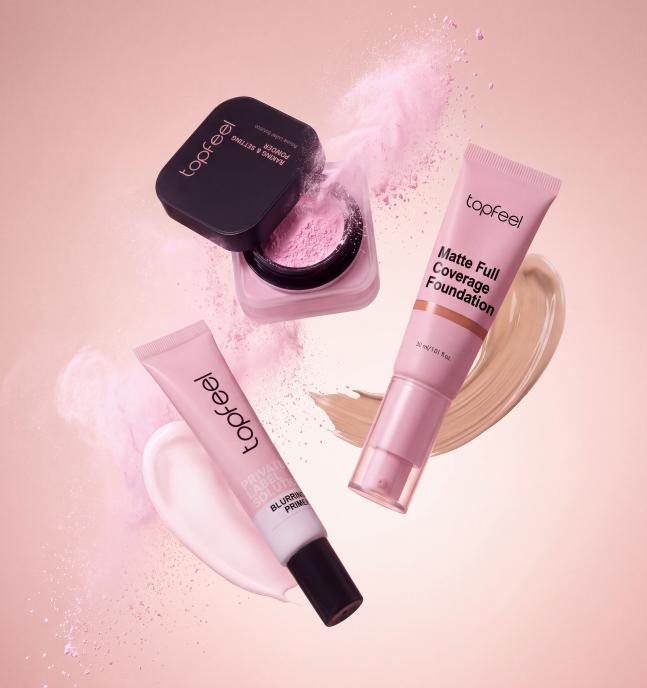
Companies seeking structured turnkey execution often partner with established specialists such as Topfeel Beauty, a professional private label cosmetics manufacturer and OEM/ODM supplier specializing in face, eye, and lip makeup. By integrating custom formulation, packaging solutions, manufacturing, and quality management under one operational roof, the company supports beauty brands from initial concept development through mass production, helping accelerate speed to market with cohesive cosmetic solutions.
4. Supply Chain Scalability and Quality Assurance Protocols
Beyond initial sampling, buyers must verify that the supplier maintains resilient raw material sourcing and multi-stage inline quality control. Key audit checkpoints include incoming raw material COA (Certificate of Analysis) verification, in-process bulk viscosity and pH checks, microbiological testing prior to filling, and automated weight verification on filling lines.
Practical Workflow for Launching an Inclusive Primer Collection
To minimize development bottlenecks, sourcing teams should follow a structured stage-gate procurement process when onboarding a manufacturing partner:
Define Technical Brief and Shade Architecture: Specify target finish (luminous, soft-matte, hydrating), skin-type compatibility, key active ingredients (such as niacinamide, hyaluronic acid, or squalane), and the exact number of base shades or undertone adjusters required.
Evaluate Benchmark Lab Submissions: Request lab samples evaluated under standardized D65 daylight simulation lighting across diverse skin models to verify true undertone neutrality and non-ashy dry-down.
Conduct Accelerated Stability and Compatibility Testing: Validate formula integrity at 45 degrees Celsius, freeze-thaw cycles, and UV exposure inside the selected commercial packaging before signing off on mass production.
Finalize Regulatory Dossiers and Pre-Production Samples: Approve final artwork, INCI ingredient declarations, and pre-production pilot samples to lock quality benchmarks prior to full-scale filling.
Structuring Your Next Inclusive Complexion Project
Developing a high-performing primer line tailored for diverse global consumers requires aligning formulation chemistry with disciplined quality assurance. For brand teams planning an upcoming complexion launch or expanding existing base shade ranges, partnering with an experienced OEM/ODM services provider ensures technical precision from laboratory bench to retail shelf.
Topfeel Beauty supports private label and custom cosmetics projects with tailored primer formulations—including silicone-free hydrating gels, tone-correcting emulsions, and pore-refining bases—paired with custom primary packaging, regulatory documentation support, and scalable mass manufacturing. Product development and procurement teams can submit technical briefs, target benchmark references, or shade architecture requirements directly through the official website to initiate sample evaluation and project planning: https://www.topfeelbeauty.com/.
About Us
Topfeel Beauty is a professional private label cosmetics manufacturer and OEM/ODM supplier specializing in face, eye and lip makeup. We provide custom formulation, packaging solutions, manufacturing and quality management to support beauty brands from product development to mass production, helping accelerate their speed to market with full cosmetic solutions.
Media Contact
Company Name: Topfeel Beauty
Contact Person: Media Relations
Email: Send Email
Country: China
Website: https://www.topfeelbeauty.com/
Press Release Distributed by ABNewswire.com
To view the original version on ABNewswire visit: Complete Guide to Selecting a Certified Makeup Primer Manufacturer for Inclusive Shade Matching