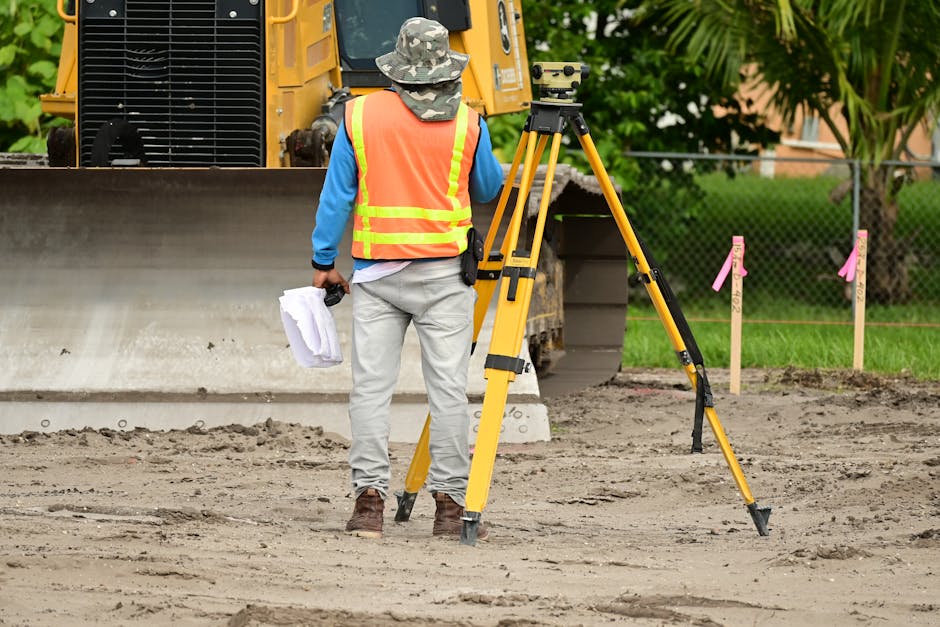
A construction project can be delayed by months because of a problem that was sitting in plain sight before the first shovel hit the ground. Property lines, underground utilities, drainage issues, and inaccurate site information may not seem exciting, but they can create expensive setbacks once work begins. That’s why California land surveying remains one of the most important early steps in the development process.
Whether the project involves a commercial building, a residential subdivision, a public infrastructure improvement, or a private property upgrade, accurate land surveying services help teams make better decisions before construction starts. Here are seven common mistakes that can lead to delays, disputes, and unexpected costs.
1. Assuming Property Boundaries Are Obvious
One of the most common mistakes is relying on fences, existing structures, or online maps to determine where a property begins and ends.
Property boundaries are legal matters, not visual estimates. A boundary survey conducted by a licensed land surveyor can identify the true limits of a property and help prevent disputes with neighboring owners. Discovering a boundary issue after construction begins can result in redesigns, legal complications, or work stoppages.
2. Skipping a Topographic Survey
A site can appear flat and straightforward while hiding significant grading, drainage, or elevation challenges.
Topographic surveys provide detailed information about the physical characteristics of a property. Engineers and architects use this data to design projects that account for slopes, drainage patterns, existing structures, vegetation, and other site conditions. Without accurate topographic information, design assumptions may prove costly once construction is underway.
3. Overlooking Underground Utilities
Many construction delays occur below ground rather than above it.
Utility locating helps identify existing infrastructure such as water lines, sewer systems, gas lines, electrical connections, and communication cables. Accidentally damaging buried utilities can halt work, create safety concerns, and generate substantial repair costs. Identifying potential conflicts early helps contractors avoid unexpected disruptions.
4. Waiting Too Long to Schedule Surveying Work
Surveying is often treated as a last-minute requirement instead of a critical planning step.
The reality is that many project decisions depend on accurate survey data. Waiting until permits are being finalized or equipment is scheduled can create bottlenecks. Early coordination allows project teams to incorporate survey findings before deadlines become urgent.
5. Using Outdated Site Information
Land changes over time.
New construction, grading activity, utility work, erosion, and environmental conditions can all affect a site. Relying on old records or previous surveys may result in inaccurate assumptions. Updated land surveying services help ensure project decisions are based on current conditions rather than historical information.
6. Ignoring Modern Mapping Technology
Traditional surveying remains essential, but technology has expanded what project teams can learn before construction begins.
Tools such as drone lidar, lidar mapping, 3D laser scanning, and remote sensing can capture detailed site information more efficiently than ever before. These technologies can be especially valuable on large, complex, or difficult-to-access properties where comprehensive data supports better planning.
7. Treating Surveying as a Compliance Requirement
Many people view surveying as a box to check before moving forward.
In reality, geospatial solutions often provide information that can influence project design, budgeting, scheduling, and risk management. Accurate site data helps teams identify potential challenges before they become expensive construction problems.
Why Land Surveying Matters
Construction projects rarely fail because of a single dramatic mistake. More often, delays result from a series of overlooked details that create problems later. Accurate land surveying helps uncover those details early.
Modern projects increasingly depend on a combination of traditional surveying expertise and advanced geospatial technology to support informed decision-making throughout the construction process.
For developers, contractors, engineers, and property owners, investing in accurate site information before construction begins is often one of the simplest ways to reduce risk, control costs, and keep projects moving forward.
Lowry Surveys Inc
sales@lowrysurveyinc.com
+1 559 645 4849
10878 California 41
Leave blank
Madera
CA
93636
United States


